My first time in Palestine...
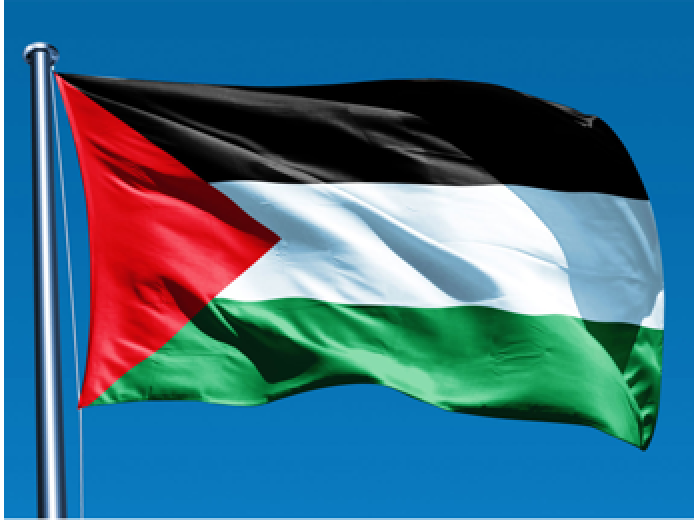
I had been posting or commenting regularly about Palestine on a well-known social media platform for as long as I dwelt and dawdled on that platform - probably for over 10 years. I no longer post there and only keep my account open to browse the daily Memories (confession: I deleted it but chickened out and resurrected it, Lazarus-like, from the dead). I get a fair amount of slagging from the lads about this but, as I always expect this kind of good-humoured banter, it doesn't knock a stir out of me; I certainly wouldn't stop because of it. Maybe it even opens a window for some for whom Palestine would not normally be high on their agendas.
But why has Palestine been high on my agenda for so long? I'll tell you.
In 1987, I emigrated to the USA and started working with an engineering company in Boston. In 1993, the first Oslo Accord - Oslo I Accord - was signed between Israel and Palestine. Many will remember the iconic handshake between Israel's Prime Minister, Yitzhak Rabin, and Palestinian leader, Yasser Arafat, with the US President, Bill Clinton, arms outstretched, encouraging them. There followed, at Taba in Egypt in 1995, the Oslo II Accord.

That was all very well and good. I was aware of this historic peace agreement but I wasn't engaged deeply nor was I aware of its intricacies and complexities.
Fast forward to 1997. I had moved to the international group within my company and had begun to work on providing home office technical support to our overseas projects. These were generally overseas development projects funded by USAID, the United States Agency for International Development.
With the Oslo Accord in place, USAID provided a lot of funding for water supply projects in Palestine - both the West Bank and Gaza. When this happens, USAID engages US companies to work on these projects and my company was successful in winning a bid on a design-build project to improve the water supply system throughout a large area of the West Bank, encompassing some well-known places such as Bethlehem and Jericho and, to me, some lesser-known places such as Hebron, Tulkarem, and Qalqiliya. This was a multi-million dollar project to develop new water sources; drill deep wells into the groundwater, build pipelines and reservoirs. The project was challenging - read creeping costs - and it became apparent to our senior management that an in-country review was needed.
One day, my boss asked if I'd be willing to travel to Palestine to spend time in our West Bank office in Ramallah, identifying problems and proposing solutions. Ramallah is a Palestinian city in the central West Bank, that serves as the de facto administrative capital of the State of Palestine. With little hesitancy and anticipating a new adventure, I said I'd go. I knew very little about Palestine but was aware that it could be dangerous, maybe risky. I was 40 years old and intrigued.
In late 1997, I flew into Ben Gurion Airport, near Tel Aviv in Israel. There are no airports in Palestine so I had no choice. Arriving into a packed airport, it was obvious that I wasn't in Kansas - or Boston - anymore. It was busy. People wore different garments. Some wore Western clothing; others were clad in long black coats, skull caps and strange-looking fur hats, while others wore long robes with veils. The clothing differentiated the religious - Jew and Muslim - from the secular. I was puzzled by the signage which was in English and Hebrew with its rounded square-looking calligraphy.
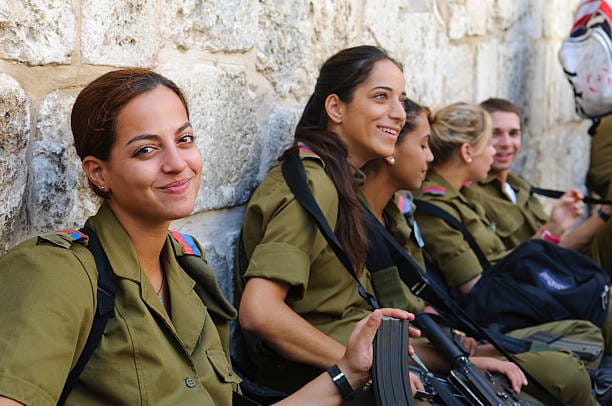
There was a strong military presence but what struck me as particularly unusual was was young age of the soldiers - most looked to be about 18 - and the fact that there seemed to be as many women as men in that olive green uniform. These are the soldiers of the Israel Defense Forces (IDF).
My company had sent a driver to meet me and, once I cleared customs and immigration, he was there to greet me. We jumped in a white car and got on the road from Tel Aviv towards Ramallah. I recall it being very early in the morning and I was fairly tired after a journey of over 20 hours. I looked forward to a rest before going into the office but I was dropped at the office and expected to start work immediately after a briefing.
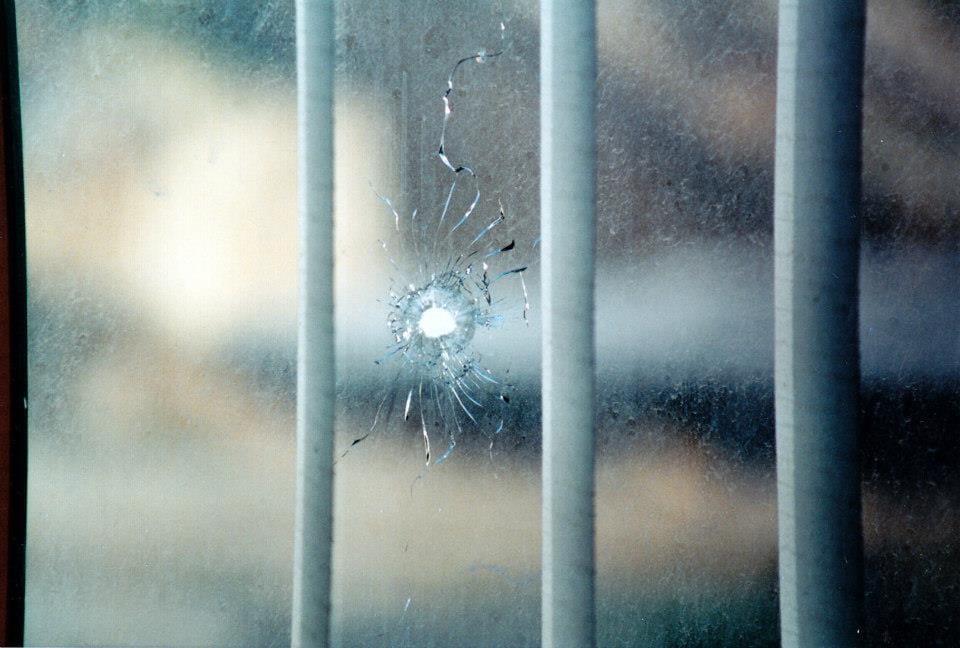
It was interesting to meet the expatriate members of our team, alongside our construction company partner's staff, comprised of both expat and local Palestinian staff. Our office was in a neighbourhood of Ramallah called Al-Bireh. I was assigned a small office and, glancing around, I noticed a small hole in the window about the size of a penny coin - a bullet hole. Our office was located very close to the Green Line, the line that separates the West Bank (Palestine) from Israel. It was, I was told, probably a stray Israeli bullet. I wasn't unduly worried; whatever had happened had happened.
I'm not going to dwell on the work I was doing there except insofar as it is relevant to my first exposure to Palestine and the people of Palestine.
From the start, the welcome I received was warm and friendly. People went out of their way to help me, to bring me glasses of sweet tea, always with a smile. After an exhausting day, I found out that I'd be sharing an apartment with some of my expat colleagues. They were engineers and draughtsmen, mostly American. Although it was a long time ago, I remember Dave O, Arne N, Richard O, being with me in the apartment in one of many similar apartment blocks that were springing up all around Ramallah, buoyed by the pervasive optimism following the signing of the peace accord some years previously. We ate shawarma for lunch and cooked for dinner. Interestingly, I found out that you couldn't get Coca Cola in Palestine, only Pepsi Cola; the former was, however, available in Israel.
Work was work. There was a good atmosphere in the office. One day, we were told that, as there was to be a student protest march that afternoon, we should leave the office and go home. We were told that this happened from time to time and that, sometimes, there could be trouble. It's likely that the advice to vacate the office came from the US Embassy in Tel Aviv. Never one not to take security advice, I was happy to head home with the lads.
Our apartment stood on a hill overlooking the main Ramallah to Jerusalem road. We were sitting around the apartment when someone said to come and have a look outside. We all went out to see a student march heading down towards the Green Line, the border with Israel. On the other side, we could see Israeli jeeps and armoured vehicles moving about. In the distance, there were clouds of what was probably tear gas. We were standing outside our apartment, about 400 metres from the road and high above it, taking in this scene. As the students approached a barricade, with the IDF facing them, things rapidly escalated. Students threw stones; soldiers fired tear gas. It was mayhem.
Yet, despite the mayhem, my abiding memory is of an old Palestinian man, in a field halfway down the hill, with a stick in his hand, tending his goats. He appeared oblivious to all that was happening down on the road. Perhaps, he'd seen it all before.
After an hour or so, things just calmed down. The students retreated back up the road to our left towards Ramallah. The IDF went their way, back towards Jerusalem.
That evening, in the apartment, we were sitting around, looking at CNN News, when a report on the confrontation came on. Tragically, we learned that a 22-year old engineering student from Birzeit University had been shot dead by the IDF less than half a mile from where we had watched the march that afternoon. I was shocked and dismayed. Writing these words, over 27 years later, I heaved and cried. I am crying.
What was revelatory about the CNN coverage of events was that, all the camera operators were behind the IDF, looking across the barricades to the students coming down the road towards them. What the world saw was Palestinian students throwing stones. What the world always sees is Palestinians as violent instigators. The world always get the Israeli perspective. You can be sure that, as the students carried their dead and injured away, the media were heading back to the comfort of the King David Hotel, or its ilk, in Jerusalem, to clink whiskey glasses with fellow 'war correspondents' and out-adrenaline each other with their war stories.
So many times over those 27 years, I have thought about that young student, killed protesting against the injustice of the occupation of his land by Israel. I contrast it to the student marches that I joined in the late 70s - protesting against fee increases. But for the luck of birth, I was that 22-year old Palestinian engineering student.
Many years later, around 2013, I worked in the UAE alongside a wonderful young Palestinian engineer who had graduated from Birzeit University. One day, I told him about my first experience of the conflict between Palestine and Israel, on that warm day in Ramallah in 1997. Although many Birzeit University students have been killed and injured over many years, he remembered the 1997 death because he too had studied engineering at the same faculty. He gave me his name but I can't recall it. I'll keep trying. I'll always remember him...
This website provides an indication of the suffering that student in Birzeit University have faced around the same time period: https://www.birzeit.edu/en/news/interview-ala-jaradat-coordinator-september-1996-web-memorial-project. Their suffering continues to this day...